ASComm IoT
GE IoT Software Driver Example Application
Simple Read and Write
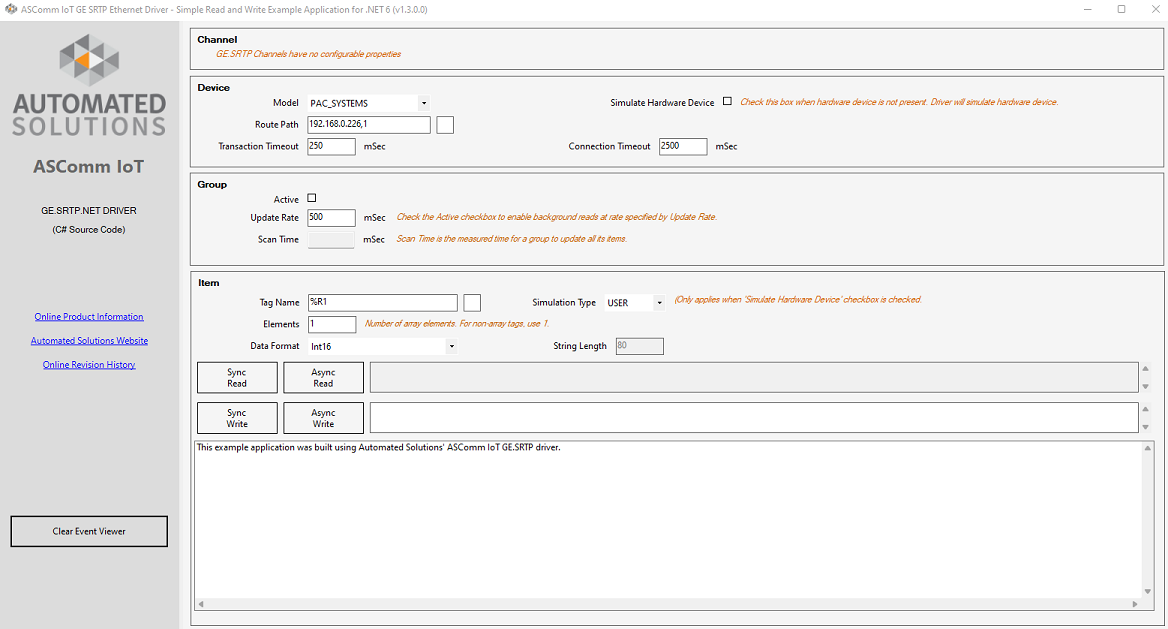
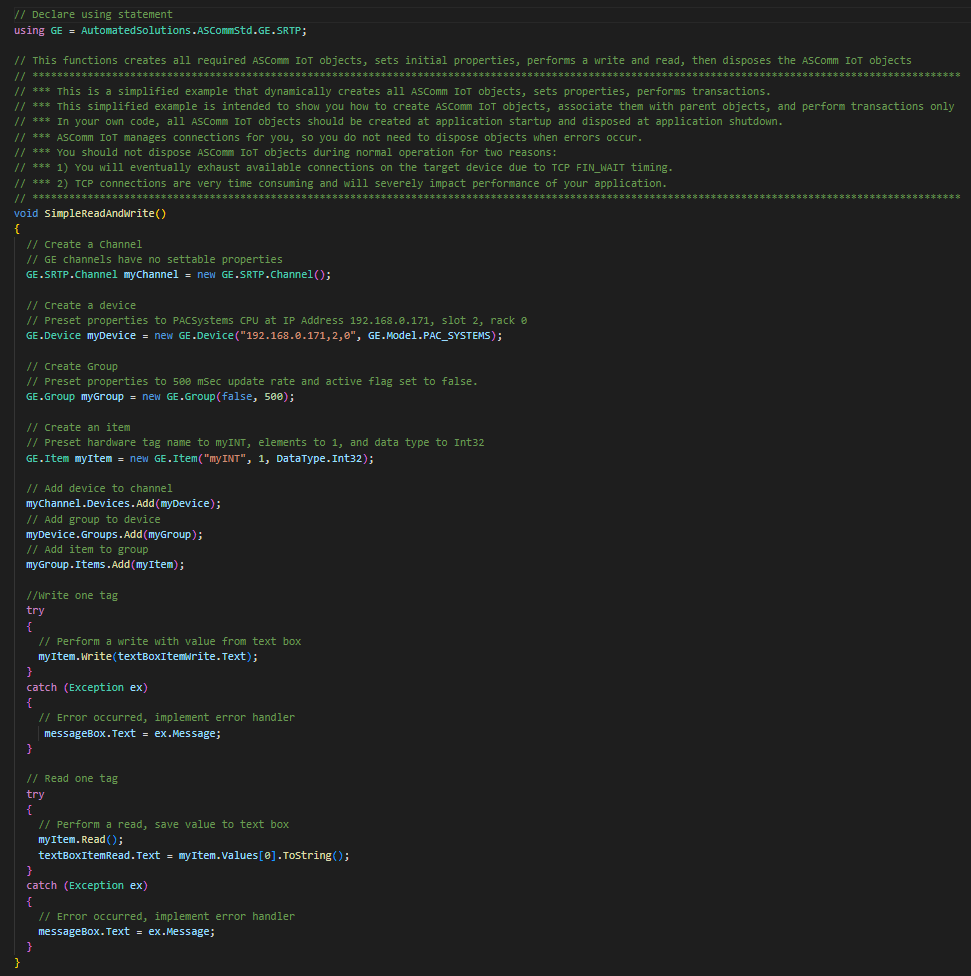
GE IoT Software Driver Code Example
ASComm IoT GE SRTP Ethernet Driver is a communications library that enables your .NET 10/9/8 applications to read and write registers on PACSystems RX3i, RX7i, Rxi, Series 90-30, and VersaMax controllers without PLC program modifications, OPC or third party libraries.
PACSystems symbolic register naming supported.
Use Visual Basic, C#, C++, and ASP.NET to create HMI, SCADA, data logging, and Industrial IoT applications targeting Windows, Linux and Android.
Powerful pre-built example applications with VB and C# source code included in development package.
Runtime-free for qualified applications
This public link is valid for 7 days and shares a thread, including any personal information you added. This link or copies made by others cannot be deleted. If you share with third parties, their policies apply. Can’t copy the link right now. Try again later.
, focusing on its exclusive 3D heritage and fan-favourite features.
, the 2010 powerhouse that redefined the franchise with its "state-of-the-art" 3D technology. Shot natively in 3D using the same Cameron/Pace Fusion 3D camera system developed for , this film wasn't just a sequel; it was a visual event. Unlocking the Special Edition Content
With the benefit of hindsight, Paul W.S. Anderson’s Resident Evil: Afterlife sits at a fascinating crossroads in the franchise. Released in 2010, it was the first film in the series to be shot natively in 3D (using the same Cameron-Pace Fusion Camera System as Avatar ), and it marked a definitive shift from "survival horror action" to "full-blown, Matrix-style superhuman spectacle." But beyond the theatrical cut, Afterlife had a specific ecosystem of that shaped how fans experienced it—from the big screen to the living room.
While previous films had used characters from the games (like Jill Valentine or Carlos Oliveira), Afterlife was notable for introducing one of the most popular characters from the Capcom source material: [1].
Here is an in-depth look at what made the 2010 release of Resident Evil: Afterlife a unique, exclusive event in film history. 1. A New Era of 3D Technology (The "Exclusive" Experience)
This public link is valid for 7 days and shares a thread, including any personal information you added. This link or copies made by others cannot be deleted. If you share with third parties, their policies apply. Can’t copy the link right now. Try again later.
, focusing on its exclusive 3D heritage and fan-favourite features.
, the 2010 powerhouse that redefined the franchise with its "state-of-the-art" 3D technology. Shot natively in 3D using the same Cameron/Pace Fusion 3D camera system developed for , this film wasn't just a sequel; it was a visual event. Unlocking the Special Edition Content
With the benefit of hindsight, Paul W.S. Anderson’s Resident Evil: Afterlife sits at a fascinating crossroads in the franchise. Released in 2010, it was the first film in the series to be shot natively in 3D (using the same Cameron-Pace Fusion Camera System as Avatar ), and it marked a definitive shift from "survival horror action" to "full-blown, Matrix-style superhuman spectacle." But beyond the theatrical cut, Afterlife had a specific ecosystem of that shaped how fans experienced it—from the big screen to the living room.
While previous films had used characters from the games (like Jill Valentine or Carlos Oliveira), Afterlife was notable for introducing one of the most popular characters from the Capcom source material: [1].
Here is an in-depth look at what made the 2010 release of Resident Evil: Afterlife a unique, exclusive event in film history. 1. A New Era of 3D Technology (The "Exclusive" Experience)