IPL 2026 Phase 1 Schedule Download Full Fixtures and Match List
With RCB vs SRH to kick-off things, download the full Phase 1 schedule
In practice, most users find that X2 or X3 multipliers offer the best balance of smoothness, image quality, and input responsiveness. X4 can work well in certain titles, but expect trade-offs. The X20 setting is best viewed as a flex rather than a practical daily driver—benchmarks have shown that pushing LSFG to X20 can result in counterintuitive experiences where the on-screen FPS counter shows 900 FPS but the game feels like it's running at 9-10 FPS.
However, there are important differences between LSFG and NVIDIA's implementation. DLSS 3 and 4 have access to motion vectors and other data from the game engine itself, which allows for more accurate frame interpolation with fewer artifacts. LSFG operates purely on the final rendered frames, without any game engine integration. Lossless Scaling -LSFG 3-
: Unlike previous versions, LSFG 3 allows you to triple or quadruple your base frame rate. x2 Mode : Targets a final output of 120+ FPS. x3 Mode : Targets 175+ FPS. In practice, most users find that X2 or
The headline feature of LSFG 3 is the manual Flow Scale slider. In previous versions, the algorithm guessed how much an object moved between frames. LSFG 3 allows you to adjust the "motion vector strength." A lower Flow Scale (0.5) reduces artifacts in side-scrolling games, while a higher Flow Scale (1.5) tracks fast 3D camera movement in first-person shooters better. This level of control is unheard of in proprietary tools like DLSS 3. However, there are important differences between LSFG and
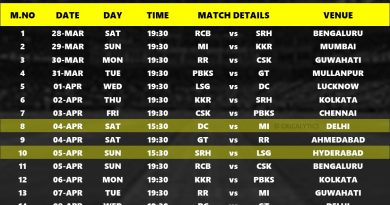
With RCB vs SRH to kick-off things, download the full Phase 1 schedule
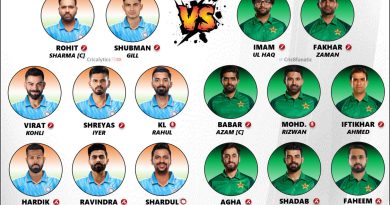
Rohit Sharma and Babar Azam in focus as we look at the Asia
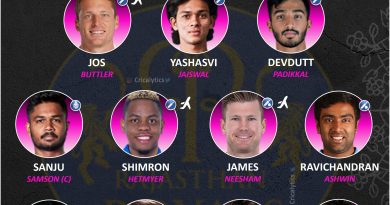
Potential match-winners, the key focus as we look at the strongest predicted playing
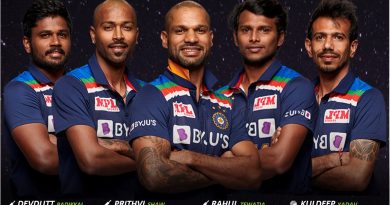
Shikhar Dhawan to lead as we look at the predicted squad for Team
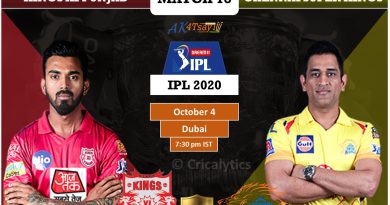
KXIP vs CSK IPL 2020: Kings XI Punjab take on Chennai Super Kings
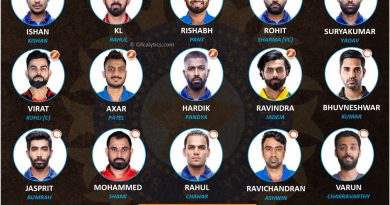
MS Dhoni to mentor and Virat Kohli to lead as we look at
Comments are closed.
Pingback: IPL 2022 Mega Auction: Final List Breakdown of Short-listed 1214 Players
Pingback: IPL 2022 Latest: Mid Season All-stars Supreme Playing 11 of Tournament
Pingback: Exclusive: T20 World Cup 2022 Strongest Predicted Squad for Team India
Pingback: India vs SA 2022: Best Predicted T20 Series Squad for Team India
Pingback: T20 World Cup 2022: Young Team India Squad Replicating T20 WC 2007
Pingback: Exclusive: IPL 2022 Dream Team of the Tournament - Hardik to Captain
Pingback: IPL 2022 Special: Bang for Buck Analysis and Best 11 by Cricalytics
Pingback: England vs India 2022: Best Predicted ODI Series Squad for Team India
Pingback: T20 World Cup 2022 Confirmed Official Schedule - Download PDF